

Am I Too Old for Dental Implants? What Actually Matters After 60, 70 & 80

There is no upper age limit for dental implants. What decides it is your health, your bone, your medications and whether you can look after them. An honest guide for patients over 60, with costs and travel planning.
"Am I too old for this?" is one of the first questions we hear from patients in their 60s, 70s and 80s. Usually it comes from a good place: nobody wants to put their body through surgery, travel abroad and spend real money on something that won't pay off.
The short answer is that age on its own almost never rules implants out. But being older does change what we look at, how we plan, and occasionally what we recommend instead. This guide explains what actually decides it, so you can judge your own situation before you talk to anyone.
Quick answer
- There is no upper age limit. Implants are placed in healthy patients in their 80s and beyond. The bone of an older adult can still fuse to an implant; it may just take the full healing time to do it.
- Your health matters far more than your birth year. Well-controlled diabetes, blood pressure or heart disease are usually fine. Uncontrolled conditions, certain bone medications and head-and-neck radiation need careful planning, and sometimes mean implants are not the right choice.
- Bone is the most common hurdle after 60. Years of missing teeth or wearing a denture shrink the jaw. That can mean a bone graft, or a full-arch design that avoids one.
- Being able to clean them matters. Implants need daily care for life. If arthritis or other limits make that hard, the plan should be simpler to clean, not abandoned.
- Older patients often benefit the most. Replacing a loose denture with fixed teeth can change how you eat, speak and feel more at 75 than at 45.
Why age is not the deciding factor
An implant works because living bone grows onto its surface and locks it in place. That process, called osseointegration, keeps working throughout adult life. It may be a little slower in older bone, which is one reason we don't rush the final teeth, but it doesn't stop.
Research on older patients reflects this. Studies that follow implant patients over 65, and even over 80, generally report survival rates broadly similar to younger adults. What does go up with age is the chance of having one of the health conditions below, and that is where the real assessment happens.
The only firm age rule runs the other way: implants are not placed in teenagers until the jaw has finished growing. At the older end, there isn't one.
What we actually assess
Here is what a careful implant plan looks at for a patient over 60, and what each factor usually means in practice.
| Factor | Why it matters | What usually happens |
|---|---|---|
| Bone volume | Long-term gaps and dentures shrink the jaw; an implant needs enough bone to anchor | CBCT 3D scan before surgery; a graft or sinus lift if needed, or a full-arch design that uses the strongest bone |
| Diabetes | Poor control slows healing and raises infection risk | Well-controlled diabetes is usually fine; we ask for a recent HbA1c |
| Osteoporosis medication | Bisphosphonates and denosumab can affect how the jaw heals after surgery | Tell us the drug, dose and how long you've taken it; oral tablets are often manageable, cancer-dose IV treatment is a different conversation |
| Blood thinners | More bleeding during and after surgery | Usually managed without stopping the drug. Never stop a blood thinner on your own; your physician decides |
| Heart conditions | A recent heart attack or stroke, or an unstable condition, makes elective surgery riskier | We wait until your physician clears you; stable, treated conditions are usually fine |
| Head and neck radiation | Radiation reduces the jaw's blood supply and ability to heal | Needs specialist assessment; sometimes implants are not advisable |
| Smoking | Roughly 2–3× the failure rate, mostly during healing | Stop before and after surgery; stopping for good is better |
| Dry mouth | Common side effect of many medications; raises gum and infection risk | Manageable with hygiene and saliva substitutes, but worth flagging |
| Hand dexterity | Implants need daily cleaning at the gumline | We design for easy cleaning; water flossers and interdental brushes help a lot |
Notice that most rows end in "usually fine" or "manageable". That's typical. The patients who should not have implants are a small group, and we cover them further down.
For a fuller picture of what raises implant risk at any age, our guide to whether dental implants can fail walks through early versus late failure and the warning signs to watch for.
The bone question, honestly
If there's one thing that is genuinely more common after 60, it's bone loss. When a tooth is lost, the bone that held it starts to shrink within months. A denture sitting on the gums for years speeds that up, because it presses on the ridge without stimulating the bone the way a root does.
So a patient who has worn a lower denture for 15 years may have a much thinner jaw than their dentist remembers. That's why we plan from a CBCT 3D scan, not a flat X-ray. It shows the height, width and density of the bone, and where the nerves and sinuses sit.
What the scan shows usually leads to one of three routes:
- Enough bone. Implants go in as planned.
- A localised shortfall. A bone graft or sinus lift at that site, done in the same visit when possible and quoted upfront.
- Widespread loss across the arch. This is where full-arch treatment such as All-on-4 often makes more sense. The implants are placed where the bone is strongest, often angled, which can avoid grafting that individual implants would need.
Which option suits which situation
Older patients tend to arrive with one of a few situations. Here is how they usually map to treatment, with our current all-in prices from the dental implants page.
| Your situation | What usually fits | Price in Medellín | Typical US price |
|---|---|---|---|
| One or two missing teeth, healthy neighbours | Single implants | From $1,200 per tooth, all-in | $4,000–$6,000 per tooth |
| Most teeth missing or failing in one arch | All-on-4 full arch | From $9,000 per arch | $25,000–$50,000 per arch |
| Full arch, heavy bite or more bone available | All-on-6 full arch | From $9,900 per arch | $30,000–$60,000 per arch |
| Loose or uncomfortable denture you're tired of | Usually All-on-4 or All-on-6 | From $9,000 per arch | $25,000–$50,000 per arch |
Extras, only when the CBCT scan shows they're needed: bone graft $500 per site, sinus lift $600, extraction $105 per tooth. They are quoted in the written plan before anything begins, never added later.
The single-implant price covers the BioHorizons implant, the abutment and the zirconia crown. The All-on-4 price covers extractions, implants and abutments, the surgical guide, a temporary bridge and the final fixed bridge from our in-house lab.
Why the denture case matters most
For many patients over 65, the real decision isn't "implant or nothing". It's "keep struggling with a denture, or move to fixed teeth". A full-arch bridge on implants doesn't come out at night, doesn't need adhesive, and doesn't cover the roof of your mouth. Patients who switch often describe it as getting back foods they had quietly given up, and being able to stop worrying about their teeth when they talk or laugh.
Planning the trip when you're over 60
Implants abroad take two trips, about six months apart. That rhythm is the same at any age, because the bone needs that time to fuse with the implant. A few practical points matter more for older travellers:
- Trip length. For a single implant, the first trip is about 3 to 5 days. For All-on-4, each visit is about 5 to 7 days, and the temporary bridge goes in a few days after surgery once the swelling settles.
- Bring a companion if you can. Not required, but helpful for the first day or two after surgery.
- Bring your full medication list, including supplements and anything for bones, blood pressure or blood thinning, plus a letter from your physician if you have a heart condition or take anticoagulants.
- Ask about travel insurance that covers pre-existing conditions. Standard policies often don't.
- Plan the healing months at home. Soft food in the early weeks, no hard biting on the implant side, and check-ins with us over WhatsApp. Your local dentist can take an X-ray if anything feels wrong.
- Medicare won't pay for it. Original Medicare doesn't cover routine dental work such as implants. Some Medicare Advantage plans include a dental benefit, usually with a low annual cap; it's worth checking, but don't count on it.
At our clinic, implants are planned and placed by Dr. Sara Pizano Pérez, our main dentist and a specialist in oral implantology and reconstructive dentistry. She plans each case in 3D from your CBCT scan, which is especially useful when bone has been lost over many years.
When implants are not the right answer
Being honest about this is part of the job. Implants may not be the best choice if:
- You've had IV bisphosphonates or similar drugs for cancer, or radiation to the jaw. The risk of the bone not healing after surgery can outweigh the benefit.
- A serious condition is uncontrolled right now: very high blood sugar, an unstable heart condition, or treatment that suppresses healing. Often the answer is "not yet", not "never".
- Surgery and two long trips would be too much for you physically. A bridge or a well-made denture from a dentist close to home may serve you better.
- Nobody will be able to clean them. If daily care isn't possible now and won't be later, a simpler removable option is easier to live with.
If one of these applies, we'll tell you, even if it means you don't travel.
Para nuestros lectores en español
Si prefieres leer en español, tenemos páginas dedicadas con precios y proceso: implantes dentales e implantes All-on-4.
The bottom line
You are very unlikely to be too old for dental implants. What decides it is your general health, your bone, your medications and your ability to look after them. Plan from a CBCT scan, be completely open about your medical history, and expect the plan to be built around the bone you have now, not the bone you had at 40. For many patients over 60, especially those tired of a loose denture, implants are one of the most worthwhile things they ever do for their health.
Next step
Send your X-rays and medical history
Tell us your age, which teeth are missing or failing, whether you wear a denture, and the medications you take. Send a panoramic X-ray or CBCT scan if you have one. We'll tell you whether implants look sensible for you, whether you're likely to need a graft, and what the plan would cost. No obligation, and if implants aren't the right answer for you, we'll say so.
Ask About Implants at Your AgeMore from our blog.

Can Dental Implants Fail? Failure Rates, Warning Signs, and How to Lower Your Risk
An honest guide to dental implant failure: how often implants fail, the difference between early and late failure, the warning signs, the risk factors you control, and what happens if one fails after you've flown home.
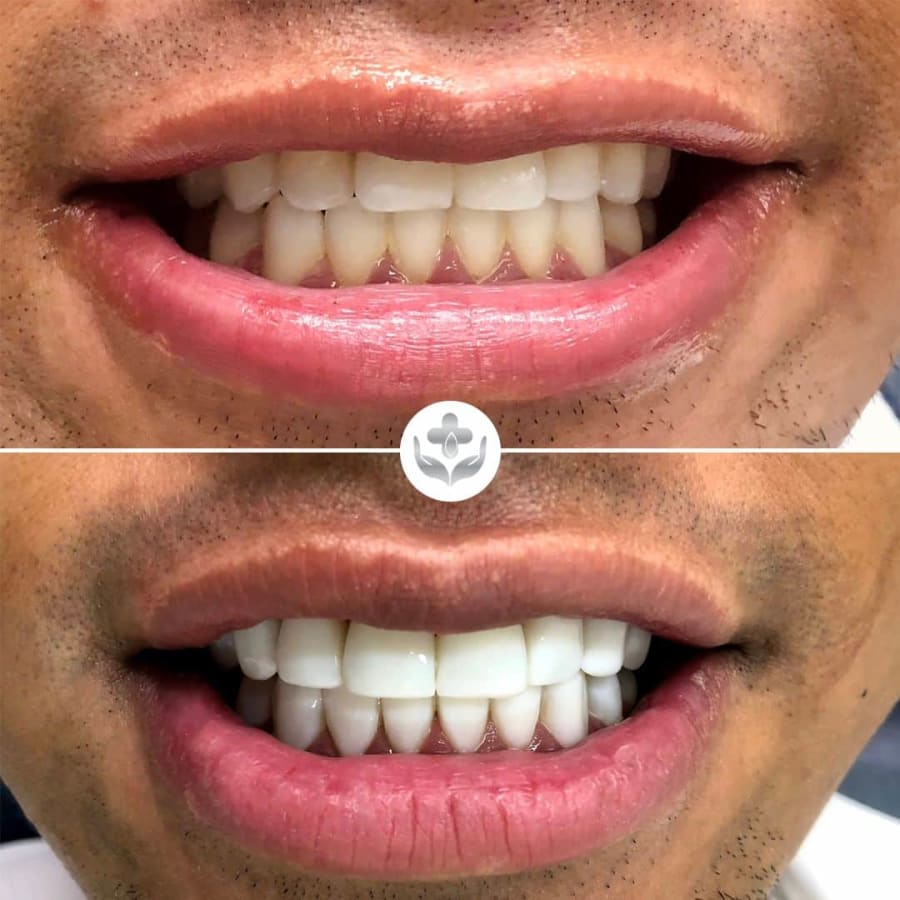
What to Expect After Getting Veneers: The First Two Weeks & Beyond
What is normal after veneers are bonded: sensitivity, a bite that feels different, a slight lisp, gum tenderness. A day-by-day guide to the first two weeks, what to eat, when to worry, and the care that makes them last.
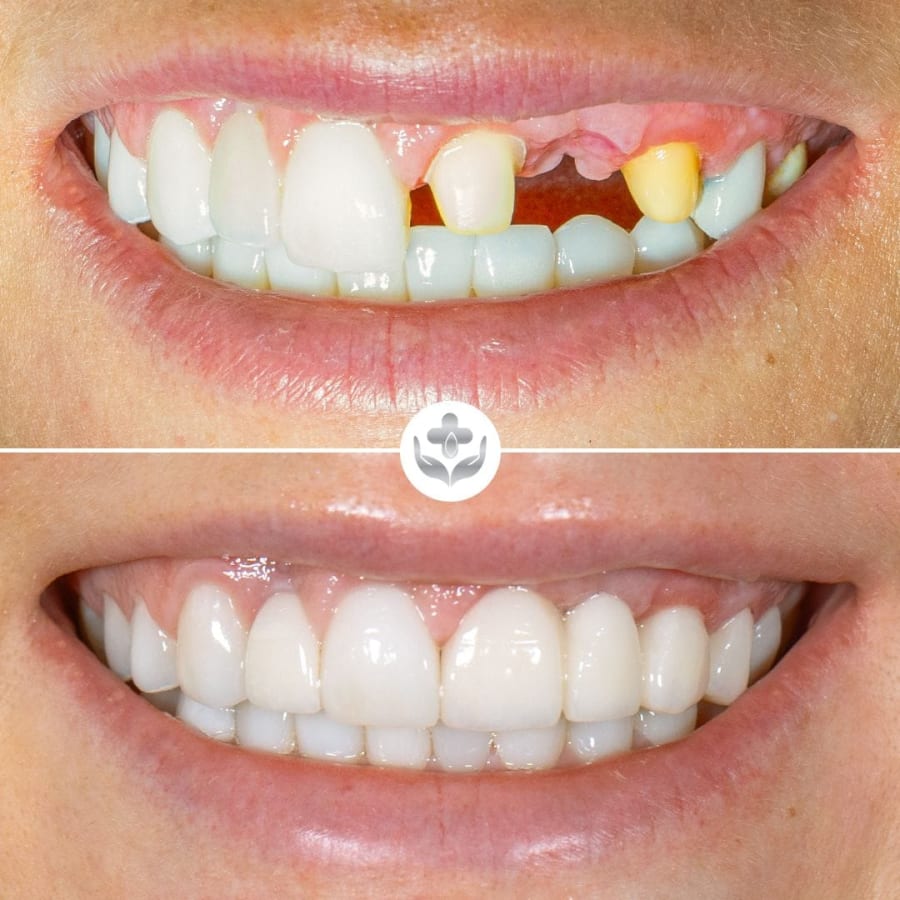
Full-Mouth Reconstruction: What It Involves, Who Needs It & How It's Sequenced
Full-mouth reconstruction rebuilds the bite as well as the smile: crowns, implants, root canals and veneers planned together. What it involves, who actually needs it, the order the work is done in, what it costs in Colombia, and when a full-arch bridge is the better answer.