

Can You Get Veneers With Bad Teeth? Cavities, Gum Disease, Old Fillings & Missing Teeth

Veneers cover the front of healthy teeth; they don't fix decay, gum disease or missing teeth. Problem by problem, what has to happen first, when a crown replaces a veneer, and how a mixed treatment plan is priced.
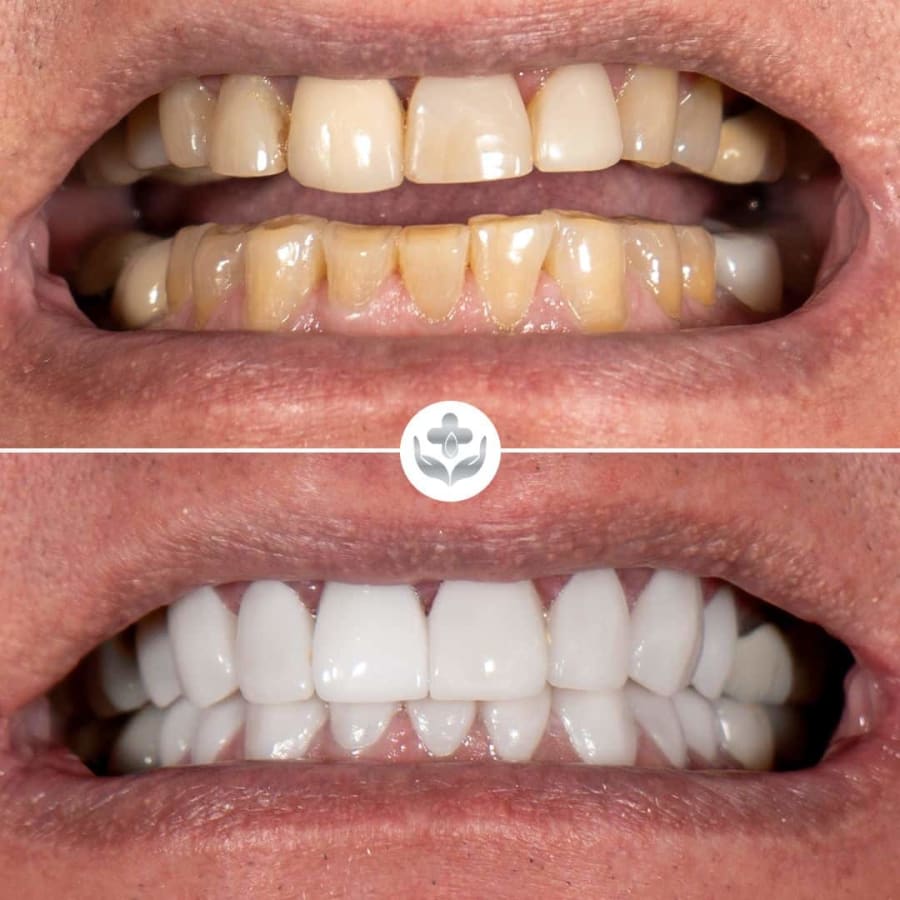
Many of the photos we receive come with an apology: "I know my teeth are bad." Stained, chipped, a few old fillings, a dark front tooth, a gap where a molar used to be. The question underneath is almost always the same: can veneers cover all of this, or am I too far gone?
The honest answer has two parts. Veneers can transform teeth that look bad: discoloured, worn, chipped, uneven or gapped. They cannot fix teeth that are unhealthy: active decay, gum disease, infection, cracks or missing teeth. Those problems have to be dealt with first, and some teeth end up with a crown or an implant instead of a veneer.
That doesn't mean you can't have a great smile. It means the plan is a little bigger than "veneers on the front teeth," and it's worth knowing what that looks like before you book a flight.
Quick answer
- Yes, if the problem is cosmetic. Stains that whitening won't lift, chips, wear, small gaps and uneven edges are what veneers are for.
- Not yet, if the problem is health. Cavities, gum disease, infection and loose teeth are treated before any veneer is bonded. A veneer placed over decay or inflamed gums fails early.
- Sometimes a different restoration. A tooth with a large filling, a root canal or a crack usually needs a crown, not a veneer. Missing teeth need an implant or a bridge.
- The result can still look uniform. Crowns and veneers can be made in the same material and shade, so a mixed plan reads as one smile.
- Your photos tell us most of it. A free review of a few smile photos usually shows whether you are a straightforward veneer case or a mixed plan, before you commit to anything.
Cosmetic problems vs health problems
The single most useful distinction is this one. A veneer is a thin shell bonded to the front of a tooth. It needs a sound tooth underneath, healthy gums around it and a bite that won't overload it. Anything that threatens those three things is a health problem and comes first.
| What you see | Cosmetic or health? | Can a veneer cover it? | What usually happens |
|---|---|---|---|
| Yellow or grey teeth, even after whitening | Cosmetic | Yes | Veneers, or whitening alone if the shade responds |
| Chips, worn or short edges | Cosmetic | Yes, if enough tooth remains | Veneers; heavy wear may need a bite assessment first |
| Small gaps, uneven sizes | Cosmetic | Yes | Veneers or composite bonding |
| Active cavities | Health | No | Decay removed and filled first, then reassessed |
| Bleeding, swollen or receding gums | Health | No | Gum treatment and cleaning first; veneers once stable |
| Large old fillings | Partly health | Sometimes | Small fillings: often fine under a veneer. Large ones: usually a crown |
| Root canal tooth, dark from inside | Health + cosmetic | Rarely | Usually a crown; sometimes internal treatment first |
| Cracked tooth | Health | No | Crown, or extraction if the crack runs deep |
| Missing tooth | Health | No | Implant or bridge; neighbouring teeth can still get veneers |
| Crowded or rotated teeth | Bite/position | Sometimes | Mild cases: veneers. Severe: aligners first |
Cavities: treat first, then veneer
A veneer bonded over active decay traps it. The decay keeps going under the shell, and by the time you notice, the veneer usually has to come off and the tooth needs more work than it would have.
So cavities are filled first. On front teeth, small cavities are often in areas the veneer preparation removes anyway, which makes the order of work simple. On back teeth that won't be veneered, the fillings are just part of getting your mouth healthy. Either way, the decay needs to be gone before anything is bonded.
What this means in practice: if your photos or X-rays show cavities, they appear as separate line items in your treatment plan, quoted before you travel or on day one if they only show up on the X-ray. You shouldn't find out about them halfway through the trip.
Gum disease: the problem most people don't know they have
Bleeding when you brush, gums that look puffy or red, gums pulling back from the teeth: these are signs of gum inflammation, and they matter more for veneers than most patients expect.
Veneer edges sit at or near the gumline. If the gums are inflamed, they bleed during bonding, which weakens the bond, and they keep changing shape as they heal, so a margin that looked perfect on day five can be visible a few months later. Plaque that collects at the edge of a veneer on unhealthy gums is also where decay under a veneer usually starts.
Mild inflammation often settles with a professional cleaning and better home care before treatment begins. More advanced gum disease takes longer and needs to be stable before veneers. In those cases the right answer can be "not on this trip," and we'd rather tell you that before you book.
If your gums look uneven rather than inflamed, that's a different question: gum contouring can even out the gumline, and it's planned as part of the veneer case.
Old fillings, root canals and cracks: often a crown, not a veneer
This is where most "bad teeth" cases change shape. A veneer covers the front surface and relies on the tooth for strength. A tooth that has already lost a lot of structure, through a large filling, a root canal or a crack, often doesn't have enough left to support it.
For those teeth, a crown is usually the better restoration. It wraps the whole tooth and protects what's left. In a smile makeover, it's common to see veneers on the healthier front teeth and crowns on one or two that are heavily filled or root-treated. We explain the difference in more detail in crown vs veneer.
A few specifics:
- Small, healthy fillings on the front of a tooth can usually stay under a veneer, or are replaced as part of the preparation.
- Large or leaking fillings are a warning sign. The tooth is often better crowned.
- Root canal teeth tend to darken from the inside and can be brittle. Most are crowned. If the root canal itself looks questionable on the X-ray, that's addressed first.
- Cracks depend on depth. A shallow crack can be protected by a crown. A crack that runs down the root usually means the tooth can't be saved.
Missing teeth: veneers can't fill a gap
A veneer needs a tooth to bond to, so it can't replace one that's missing. A missing tooth in the smile zone is usually replaced with a dental implant and crown, or with a bridge. Missing back teeth matter too: without them, more biting force lands on the front teeth, and that includes any veneers you place there.
The good news is that implants and veneers combine well. The implant crown and the veneers can be planned and shaded together so the smile looks consistent. The timing is the complication: an implant needs months to heal before its final crown, so a combined plan usually means two trips.
Worn teeth and grinding
Teeth that are short, flat or chipped along the edges are often worn from grinding (bruxism). Veneers can rebuild that length, but the grinding doesn't stop because the teeth look new. Before treatment, we check whether the bite has collapsed and whether the wear pattern points to heavy night-time grinding.
If it does, two things change. The material choice tends to move toward stronger options, and a night guard after treatment becomes part of the plan rather than a suggestion. Severe wear across the whole mouth can tip a case from "veneers" into a broader rehabilitation with crowns.
What a mixed plan costs
Prices below are the clinic per-tooth prices from our service pages. Treatment that depends on what we find, such as fillings, gum treatment, root canals and implants, is quoted individually in your plan once we've seen your photos and X-rays.
| Restoration | Price per tooth | Typical use in a "bad teeth" case |
|---|---|---|
| Composite veneer | $119 | Healthy teeth with chips, small gaps or uneven edges |
| Porcelain veneer (IPS e.max) | $275 | Healthy front teeth with stains or wear |
| Zirconia veneer | $325 | Cases where strength matters, such as grinders |
| Crown, IPS e.max porcelain | $319 | Heavily filled or root-treated front teeth |
| Crown, ZirCAD Prime zirconia | $349 | Back teeth, or teeth under heavy bite load |
| Cleaning, fillings, gum treatment, root canals | Quoted at consult | Getting the mouth healthy before cosmetic work |
A simple example: eight porcelain veneers plus two e.max crowns on root-treated teeth comes to 8 × $275 + 2 × $319 = $2,838 for the restorations, before anything else the case needs. If you're planning a larger set, the veneers in Colombia guide has the full package pricing and what's included.
How we decide what you need
Every case starts the same way, whether your teeth are in good shape or not:
- Photos first. You send a few clear photos of your smile. That's usually enough to see whether you're a straightforward veneer case or whether something needs attention first.
- A written plan. We send back what we'd suggest for each tooth, veneer, crown or "treat first," with prices, so there are no surprises.
- X-rays on day one. Some problems, like decay between teeth or under old fillings, only show on X-ray. If they change the plan, the change is quoted before any work starts.
- Health before cosmetics. Fillings, cleaning and anything urgent happen first. Veneers and crowns are made in our lab in the same building and bonded once the foundation is right.
Every plan is reviewed by Dr. Sara Pizano Pérez, our main dentist, a specialist in oral implantology and reconstructive dentistry, so teeth that need more than a veneer are caught at the planning stage.
When veneers aren't the right answer
Being honest about this saves everyone time:
- Uncontrolled gum disease. Veneers wait until the gums are stable.
- Many failing teeth at once. If most of your teeth need crowns, root canals or extraction, you're looking at full-mouth rehabilitation, not a veneer case. That's a different plan, often staged across trips.
- Very little enamel left. Bonding works best on enamel. Teeth worn deep into the dentine may do better with crowns.
- Severe crowding or bite problems. Aligners first, then veneers if you still want them.
- You'd rather not maintain them. Veneers need the same brushing, flossing and check-ups as natural teeth, plus a night guard if you grind.
And if your teeth are healthy and the only issue is colour, you may not need veneers at all. In-office whitening is worth trying first.
Para nuestros lectores en español
Si prefieres leer en español, en carillas dentales y coronas dentales explicamos cuándo se usa cada una, el proceso y los precios.
The bottom line
"Bad teeth" covers a lot of ground. If the problem is how your teeth look, veneers are usually the answer. If the problem is decay, gums, cracks or missing teeth, those get fixed first, and some teeth end up with a crown or an implant instead. A good plan puts health first and cosmetics second, and still delivers a smile that looks like one piece of work.
What you shouldn't do is let anyone bond veneers over problems they haven't checked. Ask any clinic, ours included, what they'll do about each tooth before they do it.
Next step
Not sure your teeth are "veneer-ready"?
Send us a few photos of your smile and tell us about any old fillings, root canals or missing teeth. We'll tell you honestly which teeth could take a veneer, which would need a crown or treatment first, and what the whole plan would cost. No obligation.
Send My Photos on WhatsAppMore from our blog.
Snap-On Veneers vs Real Veneers: Cost, Lifespan & What You Actually Get
Snap-on and clip-on veneers cost less up front, but they are a removable cover, not a treatment. An honest comparison with bonded composite and porcelain veneers: price per year, comfort, speech, eating, oral health, and when a snap-on actually makes sense.

Do Veneers Hurt? Pain During Prep, Bonding & the First Week, Honestly
Getting veneers is usually far less painful than people expect. What you actually feel at each step, from tooth prep under local anaesthetic to bonding day and the cold sensitivity afterwards, plus what is not normal and when to message us.

Dental Implants vs Dentures: Cost, Comfort, Bone Loss & Who Should Pick Which
Dentures cost less upfront; implants stay put and protect the jawbone. An honest comparison of comfort, chewing, bone loss, upkeep and lifetime cost, plus where implant-supported overdentures and All-on-4 fit in between.