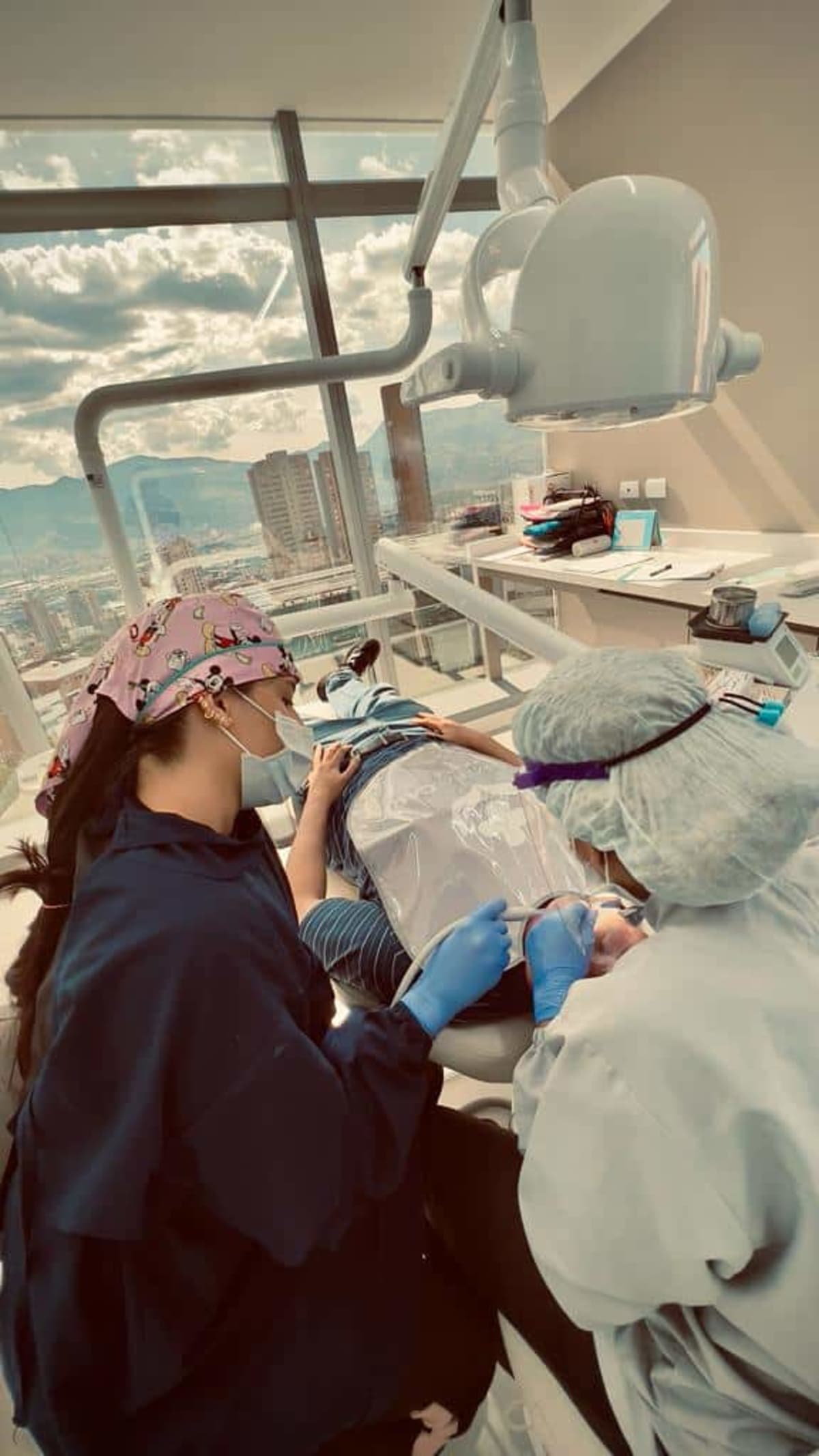
Full-arch implant surgery at Colombia Care Dental, Medellín
Full-arch implants · 4, 5 or 6 · In-house lab

All-on-4 dental implants in Colombia: a fixed smile, from $9,000 per arch.

A fixed set of teeth on implants, instead of a removable denture or failing teeth. One all-inclusive price per arch covers the extractions, the implants and abutments, the surgical guide, your temporary and the final fixed bridge. Two visits to Medellín, about six months apart, and a published price table instead of a single number.

★★★★★ 4.9 · 70+ verified patient reviews
Per arch, all-inclusive, from $9,000 vs. $25,000–$50,000 per arch in the US
  • 2 visitsIn most cases · about 6 months apart
  • 4, 5 or 6 implantsDecided by your 3D CT scan
  • In-house labBridge made where you are treated
01 — What it is

A whole arch of teeth, fixed on four implants.

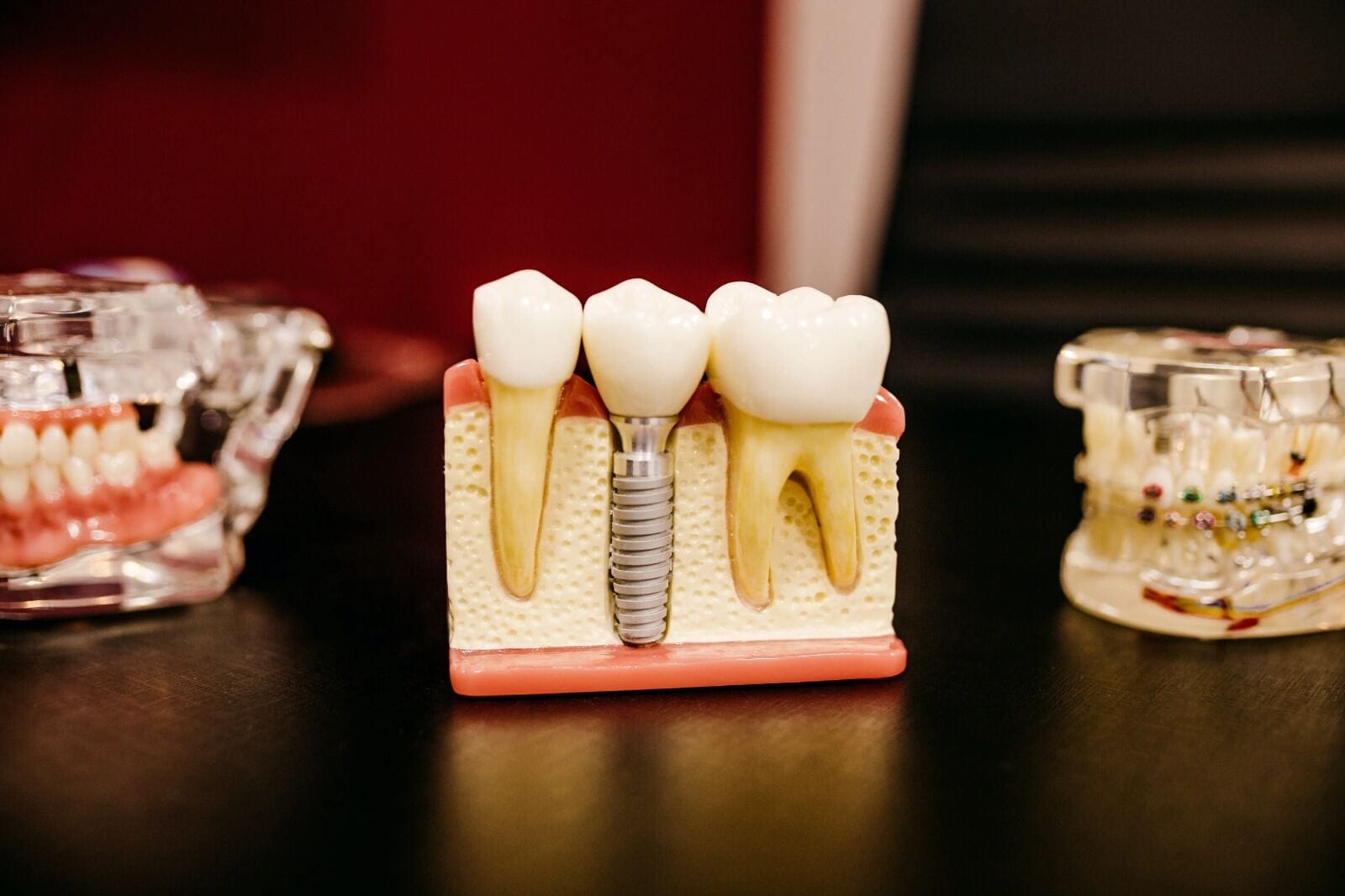
All-on-4 replaces an entire arch of teeth with a single fixed bridge carried by four dental implants. The two back implants are angled to catch more of your natural bone, which is what lets four implants do the job and usually avoids a separate bone graft. The bridge is fixed, it does not come out, and you clean it like teeth.

Fixed, not removable

Unlike a denture, the bridge is anchored to the implants and stays put. No adhesive, no plate across the roof of your mouth, nothing to take out at night. It feels and functions close to natural teeth and restores most of your chewing force.

Why four is enough

Two implants sit upright at the front and two are tilted at the back to engage denser bone and spread the load. That geometry supports a full arch on four posts, with less surgery and lower cost than replacing teeth one by one.

Who it is for

People who have lost most of their teeth, wear a loose denture, or have teeth failing from advanced gum disease or decay. One arch or both. We assess your case from your X-ray first and confirm it with a 3D CT scan on day 1.

One surgery, one team

Any remaining teeth on the arch are removed and the implants placed in the same surgical visit. Placement and the bridge happen at one clinic with its own lab: no outsourcing and no rotating handoffs.

02 — Where to start

Two honest routes, one decision.

There is more than one good way to get to fixed teeth. Which one fits depends on the teeth you still have, and we tell you which case you are, and why, once we see your X-ray.

Route 1 · Full fixed bridge
From $9,000 per arch, all-inclusive

The whole arch is replaced with one fixed bridge on 4 to 6 implants; any remaining teeth on that arch are removed. The right call when the teeth that are left are loose, heavily decayed or losing bone: building around them would mean redoing the work in a few years.

  • 4, 5 or 6 implants + fixed bridge
  • Extractions and grafting included
  • 2 visits in most cases · about 6 months apart
  • One uniform, stable result
Get a full-arch plan →
Route 2 · Keep your teeth
Each $1,200 per implant, all-inclusive

If the teeth you still have are healthy, they do not have to come out. The gaps are filled with individual implants and crowns, and where several teeth are missing in a row, two implants can carry a bridge. It preserves more of you.

  • Post + abutment + zirconia crown
  • 4 implants = $4,800 · 6 = $7,200
  • Natural teeth preserved
  • Same two-visit rhythm
See individual dental implants →

Photos show us teeth, not bone or roots. A panoramic X-ray from the last year or so, or a CT if you have had one, lets us tell you which route fits before you travel. If you do not have one, a panoramic at any local dental office is quick and inexpensive, and our 3D CT scan on day 1 confirms everything at no extra cost either way.

03 — Prices

The whole table, not a single number.

Each arch is all-inclusive: extractions, the implants and abutments, the surgical guide, your temporary and the final fixed bridge. The only two things that move the price are how many implants carry the bridge and what the bridge is made of.

Per arch (USD, all-inclusive) Hybrid acrylic Porcelain Zirconia
All-on-4 $9,000 $9,900 $10,600
All-on-5 $9,450 $10,350 $11,050
All-on-6 $9,900 $10,800 $11,500

Both arches are twice the per-arch price: from $18,000 for All-on-4 upper and lower. A 20% deposit reserves your dates. Optional sedation is billed by the hour: laughing gas $100 per hour, IV sedation $200 per hour.

Included in every arch, both visits

Nothing on this list is added later.

  • Diagnosis and planning Included 3D CT scan, X-rays, consultations and computer-guided surgical planning.
  • Surgery and teeth Included Extractions, any grafting the arch needs, implants, abutments, surgical guide, temporary and final bridge from our in-house lab.
  • Care and logistics Included Medications and post-op kit, airport pickup and all clinic transfers with a private driver. Hotel optional at $399 for 5 nights.
04 — Four, five or six

How many implants? Your scan decides, not the brochure.

The number of implants is a clinical call as much as a preference. We plan every arch on your own 3D CT scan with computer-guided software, implant position by implant position, and you see that plan before anything is done.

Four is a sound standard

All-on-4 has decades of clinical history and it is what most patients ask for. When the scan shows bone that supports it well, four implants per arch is what we place, at the base price.

When we recommend five

A fifth implant spreads the biting load across more anchors, reduces the stress on each one and protects the long-term stability of the bridge. It adds $450 per arch. When your scan says five is the better configuration we tell you so, and the All-on-4 you asked for stays available at the quoted price. The choice is yours.

When six is not worth it

The same logic can go all the way to All-on-6, for heavy bites or softer bone. But more is not automatically better: when five implants already achieve the stability we are after, we say so and do not recommend paying for a sixth.

The bridge material can wait

You are not asked to lock in the final material before surgery. High-durability hybrid acrylic is included and is what we honestly recommend for most cases. Porcelain (+$900 per arch) and zirconia (+$1,600 per arch) are optional, and the decision is made together at your final visit, once we see how your implants have integrated. What each material is, and why it is used.

The longer comparison, with bone density and bite force explained, is in All-on-4 vs All-on-6: which full-arch solution fits your case.

Acrylic, porcelain or zirconia

Three bridge materials, and why each one exists.

The implants are the same in every option. What changes is the fixed bridge that sits on them: what the teeth and the gum-coloured base are made of. Each material solves a different problem, which is why the most expensive one is not automatically the right one for you.

Hybrid acrylic · included

What it is: high-durability acrylic teeth and a gum-coloured acrylic base over a reinforced framework. Why it is used: it is the lightest option and the only one with some give, so it cushions the bite and is gentle on healing implants and on the teeth it bites against. It is also the easiest to live with long term: a chipped tooth or a worn surface is repaired or replaced simply, without remaking the bridge. The trade-off: acrylic wears and picks up stain faster than ceramics, so expect the teeth to be refreshed after some years of use.

Porcelain · +$900 per arch

What it is: ceramic layered by hand over a rigid framework. Why it is used: looks. Porcelain has the depth and translucency of natural enamel, holds its colour and gloss for many years, and resists staining from coffee, wine and tobacco far better than acrylic. The trade-off: it is heavier and harder, the ceramic layer can chip under a heavy bite, and a chip is a lab repair rather than a quick chairside fix.

Zirconia · +$1,600 per arch

What it is: a bridge milled from a solid block of zirconia, the strongest ceramic used in dentistry, finished and glazed in our lab. Why it is used: durability. It is the most resistant to wear, fracture and staining, it does not absorb odours, and it is the usual choice for strong bites and for patients who want the longest-lasting option. The trade-off: it is the most rigid and the heaviest, so it passes more force to the implants and to whatever it bites against, and if it ever does break it generally has to be remade rather than patched. Grinders are normally given a night guard.

How we choose it with you

Four things decide it: how your implants have integrated, how strong your bite is and whether you grind, what the bridge bites against (natural teeth, a denture or a second bridge), and how much space there is between your gums and your bite. None of those can be judged well before surgery, which is why we do not ask you to lock in the material up front. Acrylic is included and is what we honestly recommend for most cases; the decision is made together at your final visit.

At a glance Hybrid acrylic Porcelain Zirconia
All-on-4, per arch $9,000 $9,900 $10,600
Look Natural Most lifelike Very natural
Wear and staining Wears over the years Resists both well Most resistant
Weight and bite feel Lightest, cushioned Heavier, firm Heaviest, rigid
If something chips Simple repair Lab repair Usually remade

Whatever the final material, your temporary bridge during healing is always acrylic: it has to be light, adjustable and easy to modify while your gums change shape.

05 — How it runs

Usually two visits, about six months apart.

Everything surgical happens in one visit. Implants need months to fuse with bone and there is no shortcut for that, so the permanent bridge is made on a later trip, when it can be made well. In some cases it is three visits rather than two.

  1. Before you travel · WhatsApp

    Photos, an X-ray and a free video call

    Send photos of your teeth and a recent panoramic X-ray if you have one. We tell you which route fits, send a written plan with the price table that applies to you, and a free video call with the dentist is available before any deposit.

  2. Visit 1 · Day 1

    3D CT scan, exam and your final written plan

    The CT confirms bone volume site by site: the route, the number of implants and any grafting. Any change from the remote plan is explained and quoted before it is done, and nothing starts until you approve it.

  3. Visit 1 · Surgery day

    Everything surgical, in the same visit

    All extractions, any bone grafting and all of your implants are done together, under local anaesthetic, with optional sedation. That is what makes this a two-trip treatment rather than three.

  4. Visit 1 · A few days later

    Your temporary is fitted

    For the first few days after surgery you heal without the temporary in; that is deliberate. It goes in once the swelling allows. Its fit keeps changing over the first weeks as the inflammation goes down, so it may feel loose or need to come out for a while. This is normal, and we adjust it as needed. More on living with the temporary.

  5. At home · 4 to 6 months

    The implants fuse with your bone

    You wear the temporary while the implants integrate. We check in on WhatsApp with photos, and your dentist stays a message away.

  6. Visit 2 · 5 to 7 days

    Your permanent bridge

    Once integration is confirmed, the final bridge is made in our own lab, in the material you choose then, fitted and the bite calibrated. The remaining balance is settled at this visit, so the full amount is never due before your implants are confirmed integrated.

When it takes three visits instead of two

Two visits is the usual path, and it depends on one thing: being able to place the implants in the same surgery as the extractions. Sometimes that is not the safe call, and the day 1 CT scan is what tells us.

  • Why it happens CT decides Active infection around the teeth being removed, or too little bone to hold an implant firmly on the day, for example when a larger graft or a sinus lift has to heal first.
  • How it runs then 3 visits Visit 1: extractions and grafting, then a healing period. Visit 2: the implants and your temporary. Visit 3: the permanent bridge, once integration is confirmed.
  • What it costs Same price The per-arch price does not change with the number of visits. Two visits or three, you pay the same all-inclusive amount; only your travel is different.
  • What you are told Before surgery If your X-ray already suggests it, we say so before you travel. If the CT shows it on day 1, the revised plan and timeline are explained and approved by you before anything is done.
Worth knowing before you book

The temporary: the honest part most clinics skip.

Between your two visits you wear a temporary bridge. It is a healing-phase piece, not the final result, and the first weeks with it are an adjustment. We would rather you hear that from us now than discover it at home.

A few days without teeth, on purpose

For the first few days after surgery you heal without the temporary in. That is deliberate: once the swelling has come down enough, it can be seated and adjusted properly. It is fitted before you fly home and stays with you until the permanent bridge, around the six-month mark.

Its fit keeps changing in the first weeks

As the inflammation goes down your gums change shape, so the temporary can feel bulky, loose or ill-fitting, and at times it may not be usable for a while. This is a normal part of healing and does not depend on us. We adjust it as needed, and adjustments and repairs during treatment are included.

Soft food only, the whole healing window

Your implants are fusing to the bone and must not be loaded. Soft, no-chew food, cut small: no nuts, crusts, raw vegetables, tough meat or chewing gum. It is the single rule that protects the whole investment, and the one people relax on too early. Do not wear the temporary earlier than instructed; the warranty depends on it.

Clean gently, and send us photos

A soft brush over the temporary and along the gumline after meals, plus warm salt-water rinses. We ask for photos at week 1, week 4, month 3 and month 5, and we look at every set. Message us straight away if the bridge feels loose, moves or clicks, or if pain grows instead of easing.

Living with a temporary for a few months takes some getting used to. Every full-arch patient goes through it, at any clinic, and it is worth it for the final result: the permanent bridge at your second visit is the one built to last.

06 — Cost context

$9,000 here. $25,000+ there.

Same category of implants, same guided-surgery planning, a lab under the same roof. The gap is overhead, not material, and it holds even after flights and two hotel stays.

Treatment Colombia (all-in) USA (typical) You save
All-on-4, one arch $9,000 $25,000–$50,000 $16,000+
All-on-4, both arches $18,000 $50,000–$100,000 $32,000+
All-on-6 zirconia, one arch $11,500 $30,000–$60,000 $18,500+

Real cases from our clinic are in the before and after gallery. The full pricing picture, trip costs included, is in dental implants in Colombia: 2026 pricing breakdown.

07 — Questions

All-on-4 questions, straight answers.

What US, Canadian and UK patients ask before committing to full-arch implants in Colombia.

How much does All-on-4 cost in Colombia?

At Colombia Care Dental in Medellín, All-on-4 is from $9,000 USD per arch, all-inclusive: extractions, the implants and abutments, the surgical guide, your temporary and the final fixed bridge in hybrid acrylic. Porcelain is $9,900 and zirconia $10,600 per arch. Both arches start at $18,000. The same treatment in the US is typically $25,000 to $50,000 per arch.

What is the difference between All-on-4, All-on-5 and All-on-6?

The number of implants carrying the bridge. Four is the established standard. A fifth implant spreads the biting load across more anchors and adds $450 per arch; a sixth adds another $450. It is a clinical call as much as a preference: the 3D CT scan on day 1 shows whether your bone wants four or is better served by five or six, and we tell you when the extra implant is not worth the spend.

How many trips to Colombia does All-on-4 take?

Two visits of 5 to 7 days, about six months apart. Visit 1 covers the CT scan, your written plan, the surgery (extractions, any grafting and all implants in the same visit) and your temporary. After 4 to 6 months of healing at home, visit 2 is for the permanent bridge, made in our own lab, fitted and calibrated. In the cases where the implants cannot safely be placed in the same surgery as the extractions, because of active infection or too little bone on the day, it becomes three visits: extractions and grafting first, implants and temporary second, permanent bridge third. The day 1 CT scan tells us which, you approve the plan before anything is done, and the per-arch price is the same whether it takes two visits or three.

Will I have teeth between the two visits?

Yes, a temporary. For the first few days after surgery you heal without it, deliberately. Once it goes in, its fit keeps changing over the first weeks as the swelling goes down, so it may feel loose or need to come out for a while. That is normal and we adjust it as needed; the permanent bridge at visit 2 is what is built to last.

Which bridge material should I choose: acrylic, porcelain or zirconia?

You do not have to decide before surgery. Hybrid acrylic is included and is what we honestly recommend for most cases: it is the lightest, cushions the bite and is the simplest to repair, though it wears and stains faster than ceramic. Porcelain (+$900 per arch) is chosen for the most lifelike look and stain resistance, but it is heavier and a chip means a lab repair. Zirconia (+$1,600 per arch) is the strongest and longest-wearing, the usual choice for heavy bites, but it is the most rigid and generally has to be remade if it breaks. The decision is made together at your final visit, once we see how your implants have integrated, how you bite and what the bridge bites against.

Do I have to lose my remaining healthy teeth?

No. If the teeth you still have are sound, the conservative route is individual implants placed in the gaps, at $1,200 each all-inclusive, keeping your natural teeth. A full fixed bridge is the right call when the remaining teeth are loose, heavily decayed or losing bone. We tell you which case you are, and why, once we see your X-ray.

Is sedation available?

Yes, optionally and billed by the hour: laughing gas at $100 per hour or IV sedation at $200 per hour. The surgery itself is done under local anaesthetic. Tell us in advance so the sedation team is scheduled.

How does payment work?

A 20% deposit reserves your dates. The rest is paid at the clinic, split across your two visits, so the full amount is never due before your implants are confirmed integrated. If the CT points to a different route than the one you planned, your deposit carries over.

Honest expectations. A remote plan is built from photos and X-rays; your day 1 CT confirms the route, the number of implants and any grafting, and any change is explained and quoted before it is done. Implants integrate in the large majority of cases, but never with certainty.

Get a quote

Ready to see what your new smile would cost?

Send a few details and we'll reply within 24 hours with a personalized treatment plan, total cost, and timeline. Free, no obligation.

We never share your details. Reply within 24 hours.