

Can Dental Implants Fail? Failure Rates, Warning Signs, and How to Lower Your Risk

An honest guide to dental implant failure: how often implants fail, the difference between early and late failure, the warning signs, the risk factors you control, and what happens if one fails after you've flown home.
Dental implants are one of the most reliable procedures in dentistry. They are not infallible. Both of those statements are true, and a clinic that only tells you the first one is selling, not informing.
If you're weighing an implant, especially one placed abroad, the useful questions aren't "do implants work?" (they do) but "how often do they fail, why, when, and what happens to me if mine is one of them?" This guide answers those four questions plainly.
Quick answer
- Yes, implants can fail, but it's uncommon. For a well-planned implant in a healthy patient, long-term survival is high. The BioHorizons implants we use have documented success rates above 95% at 10 years and above 90% at 20 years in independent studies.
- Most failures happen early. The riskiest window is the first few months, while the bone is fusing to the implant (osseointegration). If it fails, it's usually before the final crown goes on.
- Late failures are mostly gum disease. Years later, the main threat is peri-implantitis, an infection around the implant that slowly destroys the bone holding it.
- You control the biggest risks. Smoking (smokers have roughly 2–3× the failure rate), poorly controlled diabetes, skipped cleanings and untreated teeth grinding move the odds more than the brand of implant does.
- A failed implant can usually be replaced. The site is cleaned, allowed to heal (sometimes with a graft), and a new implant is placed. It costs time, not usually the outcome.
Early failure vs. late failure
Implant failure isn't one thing. When it happens tells you most of what you need to know about why.
| Early failure | Late failure | |
|---|---|---|
| When | Weeks to first few months, before or around crown placement | Years after a successful crown |
| What went wrong | Bone never properly fused to the implant | Bone that had fused is lost over time |
| Most common causes | Smoking, infection, overheating the bone during drilling, loading the implant too early, too little bone | Peri-implantitis (gum infection), bite overload, grinding, poor cleaning |
| What you notice | Implant feels loose, pain that worsens instead of improving | Bleeding gums around the implant, receding gum, eventually looseness |
| Typical fix | Remove, let the site heal, re-place (often successful) | Treat the infection early; if bone loss is advanced, remove, graft, re-place |
Early failure: the bone never took
An implant works because living bone grows onto its surface and locks it in place. If that fusion doesn't happen, the implant never becomes solid. It's like a fence post set in concrete that never hardened.
The usual culprits are things that disturb the bone during the first weeks: infection, nicotine restricting blood flow, a heavy load on the implant before it has integrated, or simply not enough bone to anchor in. That last one is why a CBCT scan before surgery matters so much. It shows the width, height and density of your bone in 3D, and it's how we decide whether you need a bone graft first.
Our dental implant healing timeline walks through this fragile window week by week. The short version: feeling fine at week three doesn't mean the implant has integrated. That's why the final crown waits.
Late failure: the bone that held it is lost
An implant that integrated perfectly can still be lost years later. The leading cause is peri-implantitis: bacteria collect where the gum meets the implant, the gum becomes inflamed (peri-implant mucositis, which is reversible), and if it's left alone the inflammation spreads into the bone. An implant doesn't get cavities, but it can absolutely lose its foundation.
The early stage is quiet: bleeding when you brush or floss around the implant, slight swelling, a bit of gum recession. Caught at that stage, it's treatable with professional cleaning and better home care. Ignored for years, it can cost the implant.
The other late-failure pathway is mechanical: heavy grinding or a bite that puts too much sideways force on one implant can loosen screws, crack crowns and, over time, stress the bone.
The warning signs
Most implants never give you a reason to worry. But these are the signs worth acting on rather than waiting out:
In the first weeks after surgery:
- Pain that gets worse after day three instead of better
- Swelling that increases after day four, especially with fever
- Pus, a persistent bad taste or bad breath from the site
- Any feeling that the implant moves
Months or years later:
- Gums around the implant that bleed when you brush or floss
- Gum receding so the metal of the implant or abutment shows
- A crown that feels loose or clicks (often just a loose screw, which is a simple fix, but get it checked)
- Discomfort when biting on that tooth
A loose crown and a loose implant are very different problems. A crown that wobbles usually has a loosened abutment screw, which takes a few minutes to tighten. An implant that moves in the bone has failed to integrate or lost its support. Only an X-ray can tell you which you're dealing with, so send one before you assume the worst.
What actually raises your risk
Implant brand and surgical skill matter. But for most patients, the biggest risk factors are personal, and many are within your control.
| Risk factor | Effect | What you can do |
|---|---|---|
| Smoking / vaping nicotine | Roughly 2–3× the failure rate, mostly during healing | Stop at least 2 weeks before and 8 weeks after surgery; stopping for good is better |
| Uncontrolled diabetes | Slower healing, higher infection risk | Get your HbA1c under control first; well-controlled diabetes is usually fine |
| History of gum disease | Higher risk of peri-implantitis later | Treat active gum disease before the implant; keep up cleanings for life |
| Not enough bone | Implant can't anchor securely | CBCT scan before surgery; graft or sinus lift when needed |
| Grinding / clenching (bruxism) | Overloads implant and crown | Wear a night guard; tell your dentist if you grind |
| Poor cleaning | Plaque builds up at the gumline | Brush, floss or use a water flosser around the implant daily |
| Some medications and treatments | Certain bone drugs (e.g. bisphosphonates) and head/neck radiation affect bone healing | Disclose your full medication and medical history at consultation |
Notice what's not on the list: age. Healthy patients in their 70s and 80s get implants that last. Overall health matters far more than the birth year.
About smoking, directly
We'll still treat smokers. But we'll be honest with you about the numbers, and our warranty doesn't cover smoking-related failure, because the risk is real and largely in the patient's hands. If you've been meaning to quit, an implant is a very good reason to start.
What the dentist controls
Your side of the ledger is above. Here is ours, and it's worth asking any clinic about each point:
- 3D planning. A CBCT scan, not just a flat X-ray, before any implant goes in. It shows whether there's enough bone and where the nerves and sinuses are.
- A proven implant system. We use BioHorizons, an American system with decades of published data. Unknown, unbranded implants are one of the quiet ways cheap dentistry gets cheap, and replacement parts can be impossible to find later.
- Grafting when it's needed, not skipped to save time. Placing an implant into thin bone to keep a schedule is how early failures are made.
- Waiting for integration before the final crown. Loading an implant too early causes micromotion, and micromotion prevents fusion.
- A real follow-up plan. Who checks the implant after you fly home, and how? We build video check-ins into every international implant case.
If an implant fails: what happens next
This is the part people are most anxious about, so here's the honest sequence:
- Diagnosis. An X-ray (and sometimes a CBCT) confirms whether the implant has failed or whether it's a fixable problem like a loose screw or early gum inflammation.
- Removal. A failed implant is usually easy to remove, precisely because the bone isn't holding it. It's often quicker and more comfortable than the original surgery.
- Healing. The site is cleaned and left to heal, typically for a few months. If bone was lost, a graft may be placed to rebuild it.
- Re-placement. A new implant goes in once the site is ready, often successfully. The reason for the first failure (smoking, infection, too little bone) is addressed first so it doesn't repeat.
Failure when you live in another country
If you're getting implants abroad, ask about this before you book, not after. Here's how we handle it:
- Healing happens at home anyway. The implant integrates over months whether you live in Medellín or Miami. We plan the case so surgery is on your first trip and the final crown is on a later one, with video check-ins in between.
- Send X-rays, not just a description. If something feels wrong, a local dentist can take an X-ray and we can review it the same day over WhatsApp.
- Our 2-year written warranty covers the crown. If an implant fails to integrate, the redo terms are set out in writing in your treatment plan before you travel.
- Flights are never part of any warranty. That's true here and at every clinic we know of. Budget for the possibility of an extra trip, even though most patients never need one.
What it costs to do it right
A single implant here is $1,200 all-in: the BioHorizons post, the abutment and the zirconia crown, versus roughly $4,000–$6,000 in the US. If your CBCT shows you need extra steps, they're quoted upfront in your treatment plan, never added later:
| Extra procedure | Price | When it's needed |
|---|---|---|
| Bone graft | $500 per site | Bone too thin or soft to anchor an implant |
| Sinus lift | $600 | Upper back teeth where the sinus floor is low |
| Tooth extraction | $105 per tooth | Removing a failing tooth, often the same visit |
Skipping a graft you need is the most expensive way to save $500. Our dental implants page has the full breakdown, including All-on-4 and All-on-6 for patients replacing a full arch.
Para nuestros lectores en español
Si prefieres leer sobre implantes en español, tenemos una página dedicada con precios, proceso y tiempos de recuperación: implantes dentales.
Next step
If you want an honest read on your own risk, send us a panoramic X-ray or CBCT scan (or a few photos and a short medical history) on WhatsApp. We'll tell you whether you're likely to need a graft, which risk factors apply to you, and what your plan would cost, before you book anything. You can also reach us through our contact page. Free, no obligation, usually within 24 hours.
More from our blog.
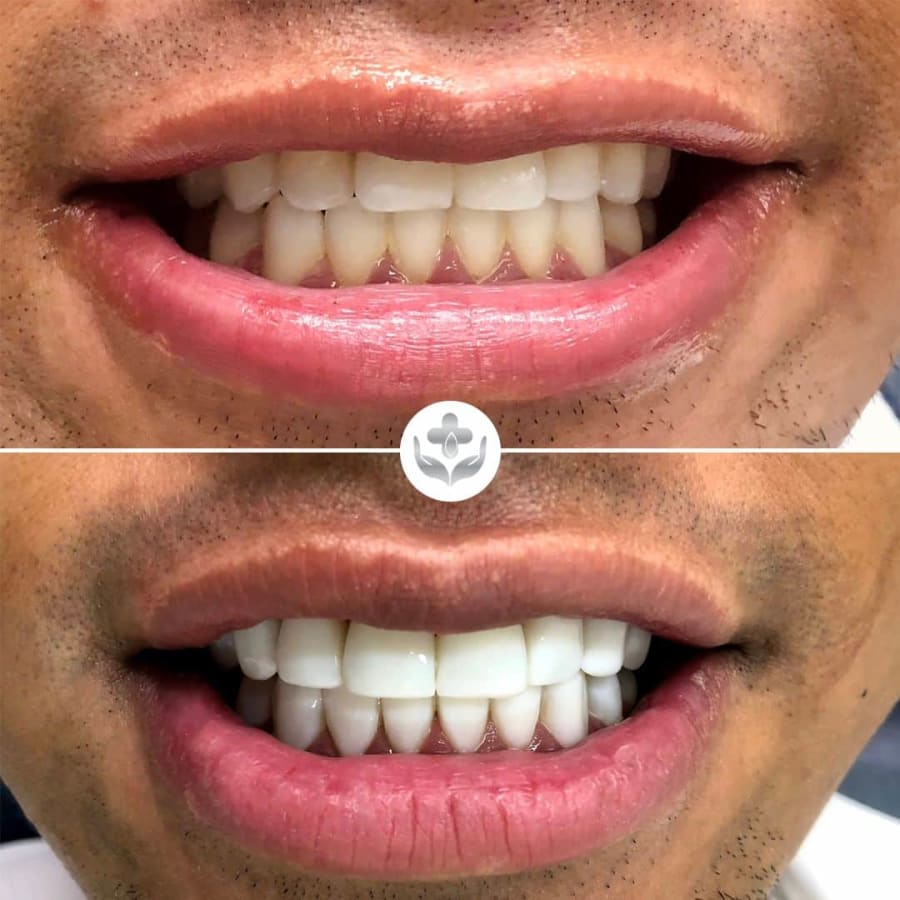
What to Expect After Getting Veneers: The First Two Weeks & Beyond
What is normal after veneers are bonded: sensitivity, a bite that feels different, a slight lisp, gum tenderness. A day-by-day guide to the first two weeks, what to eat, when to worry, and the care that makes them last.
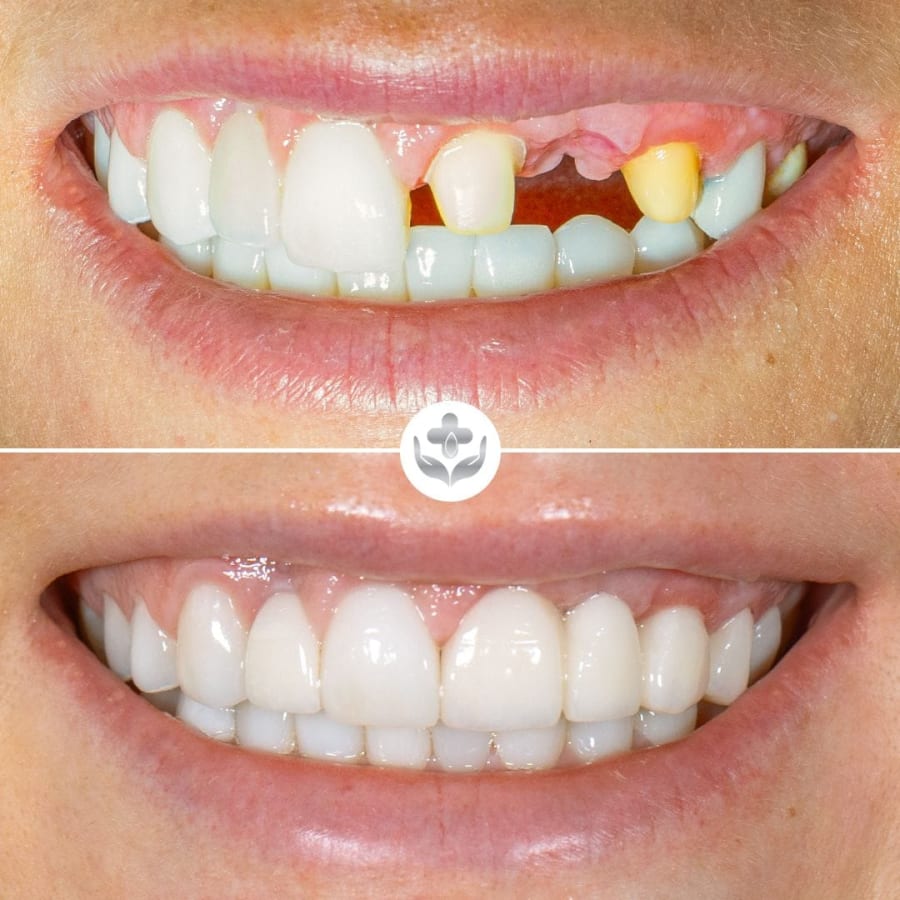
Full-Mouth Reconstruction: What It Involves, Who Needs It & How It's Sequenced
Full-mouth reconstruction rebuilds the bite as well as the smile: crowns, implants, root canals and veneers planned together. What it involves, who actually needs it, the order the work is done in, what it costs in Colombia, and when a full-arch bridge is the better answer.

Veneer Chipped or Fell Off After You Flew Home? What to Do First
A veneer that pops off or chips after a dental trip abroad is rarely an emergency. What to do in the first 24 hours, whether a local dentist can re-bond it, what the warranty covers, and how to stop it happening again.